Q&A with Dr Nafees Hamid
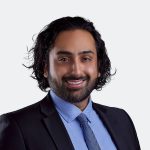
Dr Nafees Hamid is the Research & Policy Director and co-Principal Investigator on the King’s College London strand of the XCEPT research programme (Cross-Border Conflict Evidence, Policy and Trends), where the team studies why, in fragile and conflict-affected states, some people move towards violence while others move towards peace. Here, he tells us how a career that began as a professional actor led him into the minds of people who join armed and extremist groups, and what the research has taught him about trauma, morality and negotiation as the programme enters its final phase.
You worked as a professional actor before becoming a cognitive scientist. How did that transition happen?
I started off as a working actor. I did everything from commercials to voice overs to professional theatre, including Off-Broadway remounts, and met a few well-known actors along the way. One was Robin Williams, who played the neurologist Oliver Sacks in the film Awakenings. We shared a nerdy passion for neuroscience.
One thing he said stuck with me. His point was, roughly: as actors, and as humans, we are storytellers. We build religions and national myths out of stories – and sometimes we even go to war and kill each other over them. Science, at least, has given us consensus about the natural world: broadly, we no longer have to invent stories to explain earthquakes, for example. Maybe, he thought, we could do the same for ourselves – find out where morality comes from: how much is nature and how much is nurture. Now that we have a window into the brain, why not tell the greatest story of all: the story of us. Become a cognitive scientist.
I didn’t leave acting straight away, but the conversation stayed with me. A few years later I landed in some scholarships that gave me an almost unheard-of free education in the United States, studying cognitive science, neuroscience, psychology and anthropology. After that I moved to Paris and did a masters in cognitive science with a focus on moral psychology.
How did you go from cognitive science to studying people who join armed and extremist groups?
I’d planned to go back into acting, but I met an anthropologist, known for travelling the world meeting members of groups like al-Qaeda and the Taliban – a kind of Indiana Jones figure, which appealed to me. He didn’t really care so much about my cognitive science degrees (anyone can learn that, he’d said), but the moment he heard I’d been an actor, he lit up: that’s the special thing. To this day I don’t know exactly what he meant.
He hired me to interview and understand what motivates people to join or support extremist organisations, and eventually to get some into a brain scanner – as far as I know, the first brain-imaging studies of extremist group members. A subcomponent of that work became my PhD, and pulled me into applied spaces: shaping national strategies for reintegrating former fighters, advising governments on strategic communications. It’s what led me to XCEPT.
That work must have taken a personal toll. What did it teach you about empathy?
When I first tried to work out why acting mattered here, I assumed it was empathy, because actors must empathise even with the worst people in order to play them. I regret that now: I used so much empathy meeting members of extremist groups that it led to vicarious trauma and burnout.
Empathy, I learned the hard way, is in some ways a self-focused emotion: it works by imagining yourself in another’s place, and draws on the parts of the brain to do with the self. It’s useful for understanding, but it costs you. Compassion is different. It isn’t about you, it’s about wishing another person well – and it doesn’t produce the same burnout. A Buddhist monk first told me this, with none of the neuroscience: I was using too much empathy, and should try compassion. Now, working with mediators, I help them tell the difference. In empathy you become a sponge, absorbing the other person’s pain; in compassion you become a container, holding the space so they can keep speaking.
XCEPT began in a very different world. How has the work changed?
When the project started, there was a substantial focus on post-conflict: local peacebuilding, healing trauma in shattered communities – with the idea that this could buffer future outbreaks of violence. Much of that remains vital. But since then, many devastating wars have broken out, we’ve seen a resurgence of great power competition, and some conflict resolution has moved towards elite bargains. As a result, my work has shifted towards mediation and conflict transformation. For instance: how you get leaders, often carrying their own histories of trauma, to talk to one another productively.
Much of what we’ve found challenges the standard “carrots and sticks” approach – incentives and disincentives – to conflict resolution. From Hezbollah to armed groups in Colombia and Syria, purely material levers – sanctions, trade deals, the threat of force – prove a limited tool, and can even backfire. People aren’t only calculating their material wellbeing; they think about honour, dignity and respect, and will endure enormous suffering for a cause they believe is righteous. So, we’ve been mapping the other tools policymakers and practitioners can use: acknowledging collective traumas, symbolic concessions on deeply held values, and framing material offers so they don’t look like an attempt to buy off what people hold sacred.
What has stood out most across the XCEPT research to you?
A few themes cut across everything, whether in Colombia, Syria, or Lebanon. One is adverse childhood experiences: people often had very difficult childhoods and were, in effect, looking for a surrogate family – a search that sometimes led them into an armed group. But we shouldn’t de-politicise why those families were struggling. In Colombia, recruitment clustered where displacement and lost livelihoods – and the substance abuse and domestic violence that can follow – had concentrated childhood adversity in certain localities. The trauma doesn’t emerge randomly; there are usually political and economic factors behind it.
The other is moral injury – the wound of having one’s deepest moral expectations violated. People join believing in a righteous cause, then discover corruption, or leaders serving their own interests. Strikingly, moral injury – often studied in soldiers – is now appearing among civilian populations who feel betrayed by their institutions, or complicit in decisions they came to regret. That erosion can set conditions for further conflict or violence. What I value most is how our work ties these levels together; from the individual brain, through institutions, to state-to-state negotiation.
What has been the reaction to your work from governments and international organisations?
The reaction has been overwhelmingly positive. What I’ve been looking at is how moral psychology should inform policy making. And as it turns out there’s a huge appetite for this. I was called upon to help shape the national policies on the reintegration and rehabilitation of ISIS returnees to Kosovo and Tunisia. The French Prime Minister’s office sought my counsel on their countering violent extremism strategic communications practices. The head of the UK counter-terrorism police cited my work as the scientific reference point in a major policy address. Recently, the President’s Office of a Latin American country requested that I organise conflict mediation and negotiation training for his government.
In fact, in recent fieldwork that I conducted in Colombia, the largest leftist guerilla group, called the ELN, requested that I help mediate their peace negotiations with the government, because in their words, the state “does not understand us” and so they make all the wrong offers. And there have been countless engagements with the Foreign, Commonwealth & Development Office, Home Office, Ministry of Defence, the US State Department, the United Nations, the European Union and many more government and inter-governmental organisations.
Have you found that the public engages with your work?
I’ve found the broader public reaction quite heartening too. From being featured in documentaries like The Mind Explained on Netflix, and Morgan Freeman’s Through the Wormhole, to popular podcasts like The Hidden Brain, and many appearances in major TV news programmes. I think even though the topic can be quite niche, the psychological angle provides a broader touchstone that people can connect with. Whether we’re talking about the psychology of strategic communications; the general role that neuroscience may play in thinking about social issues like security; explaining the psychological underpinnings of why the Israeli-Palestinian conflict is so intractable; how to engage with leadership of countries like in Syria; explaining why civilians can sometimes oppose the disarmament of groups that they otherwise oppose, like Hezbollah; the role of adverse childhood experiences in violent extremism; or how moral emotions like outrage explain the motivations of armed actors like Syrian rebels. Yes, these are studies that have been conducted with specific groups in specific contexts, but people rightfully see something much broader being said about human behaviour.
What can we expect from XCEPT in this final phase?
We’re coming to the end of the programme, so the focus now is on synthesis. Expect a series of outputs on armed actors, mediation and negotiation, trust in institutions, adverse childhood experiences, trauma and moral injury. We will share emerging findings from new, valuable data from Iraq, South Sudan, Syria and Lebanon, where these questions have rarely been studied before. There are so many important questions we can ask these datasets – many more than we will have time to ask during the life of the project. There will also be a capstone report, and our conference on 16–17 November, which will feature our research from the past five years.
Robin Williams was one of the people who set you on this path. Looking back, was he right to say that science can solve some of our biggest problems?
In one sense, no. Implicit in what he told me was the idea that science would eventually tell us the true story of who we are – that we’d stop making things up, reach consensus, and some peace would follow. I don’t believe that anymore. I don’t think we ever get past stories. What science can do is help us gain distance from them – to see our stories as stories, and notice the threads they share. But we are, ultimately, a storytelling creature. Our narratives are central to who we are, and we’ll have to learn to live alongside one another’s narratives – different memories, even different versions of history – and still resolve our conflicts and co-exist.
That’s part of why I’m bringing this work back into a theatrical space (with the famed theatre company Complicité and its artistic director Simon McBurney), alongside a book (‘The Extremist Mind’), drawing together the science and the people I’ve met along the way. For me it’s come full circle: I left the arts for the sciences, and I no longer see the stark line between them. The arts aren’t merely a vehicle for communicating science: they are a way of understanding the world in their own right, and the sciences have a great deal to learn from them.
Photo credit: JuanMa Casas/PIRATA Films
This article is issued by the Cross-Border Conflict Evidence, Policy and Trends (XCEPT) research programme, funded by UK International Development. XCEPT brings together world-leading experts and local researchers to examine conflict-affected borderlands, how conflicts connect across borders, the intersection of climate stresses and conflict, and the drivers of violent and peaceful behaviour, to inform policies and programmes that support peace.
The views and opinions expressed in this document are those of the author(s) and do not necessarily represent those of the UK government.