Uncovering the Motivations of Jihadists in a Hostage Crisis
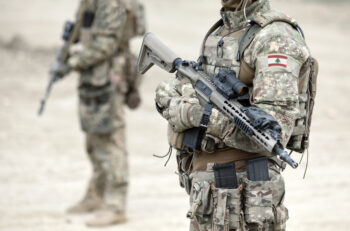
Dr Rajan Basra is a researcher on the XCEPT programme at King’s College London. His paper with Dr Craig Larkin, More Than Bargaining Chips, draws on interviews with the families of 30 people kidnapped in the 2014 Arsal hostage crisis in Lebanon, when Jabhat al-Nusra and Islamic State seized Lebanese soldiers and police officers. In this interview, he explains why the jihadists’ motivations went far beyond ransoms and prisoner swaps, and why that still matters today.
What led you to research the Arsal hostage crisis?
It was really a chance encounter. I was in Lebanon interviewing people who had spent time in prison for their alleged support for ISIS, and I was put in contact with a man whose son had been kidnapped in Arsal in 2014. I did not know the story at all. He described things I hadn’t come across anywhere in the history of terrorism, like the families of hostages going to visit them in captivity. I couldn’t stop thinking about it, so we went back out to interview him again, and the other families caught up in the crisis. Although it has largely been forgotten outside Lebanon, inside the country it was a national crisis that dominated the news for years.
Your central finding is that the hostage-taking had intrinsic emotional value for the jihadists, not just instrumental value. Can you explain that?
The typical approach when you look at terrorist kidnappings is to assume the perpetrators want some future reward: a ransom, a concession, the release of their comrades from prison. The kidnapping is treated as an instrument for achieving a future objective. But I thought people had overlooked the expressive motivations. Expressive motivations are when you engage in a behaviour to express your feelings, your identity or your beliefs. The action is itself the reward. It’s not an instrument for something in the future; it’s about the here and now. When we spoke with the families, a consistent picture emerged. Alongside the instrumental motivations, which were definitely there, there was something much more immediate: when the captors interacted with the families, they felt a sense of power and control over their fate, and they behaved in ways that reinforced that – behaviour that serves no apparent purpose from an instrumental point of view.
Can you give an example of something the captors did that demonstrates their expressive motivation?
One instance comes to mind. A mother was on a group visit to see her son, who was being held captive. When they were in the car, one of the captors asked which of the hostages was her son. She gave the name, and the captor looked at her through the rear-view mirror and said, “Oh, him? I’ve been fantasising about slitting his throat,” drawing his finger across his neck. The mother was, of course, horrified. What is the purpose of issuing that threat? Is it going to further their political objectives? Help the negotiations? Secure a ransom? I can’t see that connection. What it did do was immediately show the mother who was in charge. For that jihadi, it must have made him feel he had absolute control over these people and their fate. The threat was itself the goal – the feeling of power, even if he never intended to act on it.
You describe the hostages as more than bargaining chips. What were they to the jihadists?
In many cases, for the individual jihadists, the hostages were their opportunity to get revenge on the people they felt had wronged them. A lot of them actually said to the families: “My entire village was destroyed. My family were killed. I’ve got nothing else to live for. All I want to do is get revenge.” Taking the hostages gave them that opportunity.
The two groups behaved very differently. What did that reveal about their motivations?
Nusra showed some strategic thinking about how their actions would be perceived. They released the Sunni hostages they held within the first month, as a show of solidarity with the Sunni community they claimed to represent, and on an earlier occasion released one Sunni, one Christian and one Druze hostage as an ostensible gesture of goodwill. Allowing families to visit, they positioned themselves in a way to show that they’re not mindless savages. They contrasted their conduct with that of the Lebanese government, who they accused of consorting with Hezbollah.
ISIS was far more absolute. As a Sunni group, they regarded the Sunni hostages as having left the faith by fighting for the Lebanese army, gave them no special treatment, and didn’t care how that was perceived. The difference between their consideration for public perception even showed in how they killed: while Nusra would shoot a hostage, ISIS would behead them. There was certainly sadism in some of the acts committed by the ISIS group, which speaks again to the expressive motivations and revenge I mentioned earlier.
If the individuals were driven by revenge and power, what did the group as a whole want?
You can distinguish between individual and group-level motivations. For the militants themselves, there were strong expressive motivations — that feeling of power, control and revenge. But at the group level, the leadership wanted strategic concessions: the release of their comrades from Lebanese prisons, money, other demands. Nusra knew that was achievable because they had negotiated before – only the year before, over the Maaloula nuns, with the same Lebanese negotiator. ISIS was different. The families told us it was simply impossible to negotiate with them; they came with outlandish demands that could never be met. They weren’t thinking strategically. For them, the balance had tipped towards the expressive.
Twelve years on, why does this crisis still matter?
As we’ve seen more recently with the Gaza war hostage crisis, there isn’t an end in sight for mass kidnappings like these. From Lebanon, there are real lessons about how negotiations and public communications are handled. We need more emphasis on the intangible side; the desire for status, respect, even dignity. As strange as it may sound, these groups wanted to be treated with a dignity they felt they had been denied. There is an example from the crisis itself: when a Druze political leader went on television and said Nusra were “not terrorists but revolutionaries”, it led to immediate improvements in how the Druze hostages were treated.
In Arsal, we see a unique involvement of families in hostage negotiations, and through the interviews, we clearly see the immense stress they were put under. But victims’ families are always going to be impacted by such terrible circumstances. So we also need to broaden our understanding of who the victims in a hostage crisis are, to include the families of those held captive, and give them the right emotional, psychological, political and financial support.

This publication was produced as part of the XCEPT programme, a programme funded by UK International Development from the UK government. The views expressed do not necessarily reflect the UK government’s official policies.