
Promoting Reconciliation: Lessons from the Social Psychology of Extremism and Forgiveness
By Alexandra Vázquez Botana and Sam Hibbs
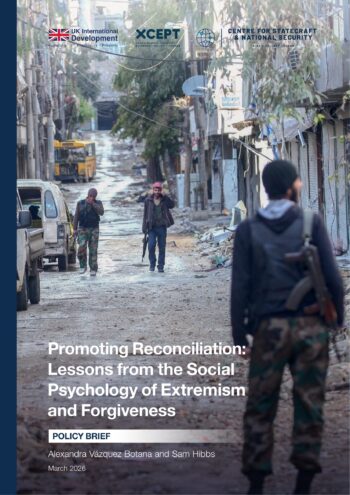
This Policy Brief highlights policy recommendations to promote reconciliation between antagonistic groups, drawing on a critical literature review which explored a selection of psychosocial factors. These factors influence a variety of behaviours, including extremist actions, propensity to intergroup violence and willingness to reconcile with negatively perceived out‑groups.
Without resolution, grievances between groups can breed extremism, and the likelihood of this is multiplied in the absence of basic resources and political stability, such as in the aftermath of severe conflicts. While extremism and reconciliation do not exist on a single spectrum, many factors affecting one also affect the other. Here, we examine social‑psychological issues such as group association, identity fusion and group emotions, before considering factors such as social cohesion, social capital and collective efficacy.
Read the full Policy Brief here, and accompanying Review of Evidence here.
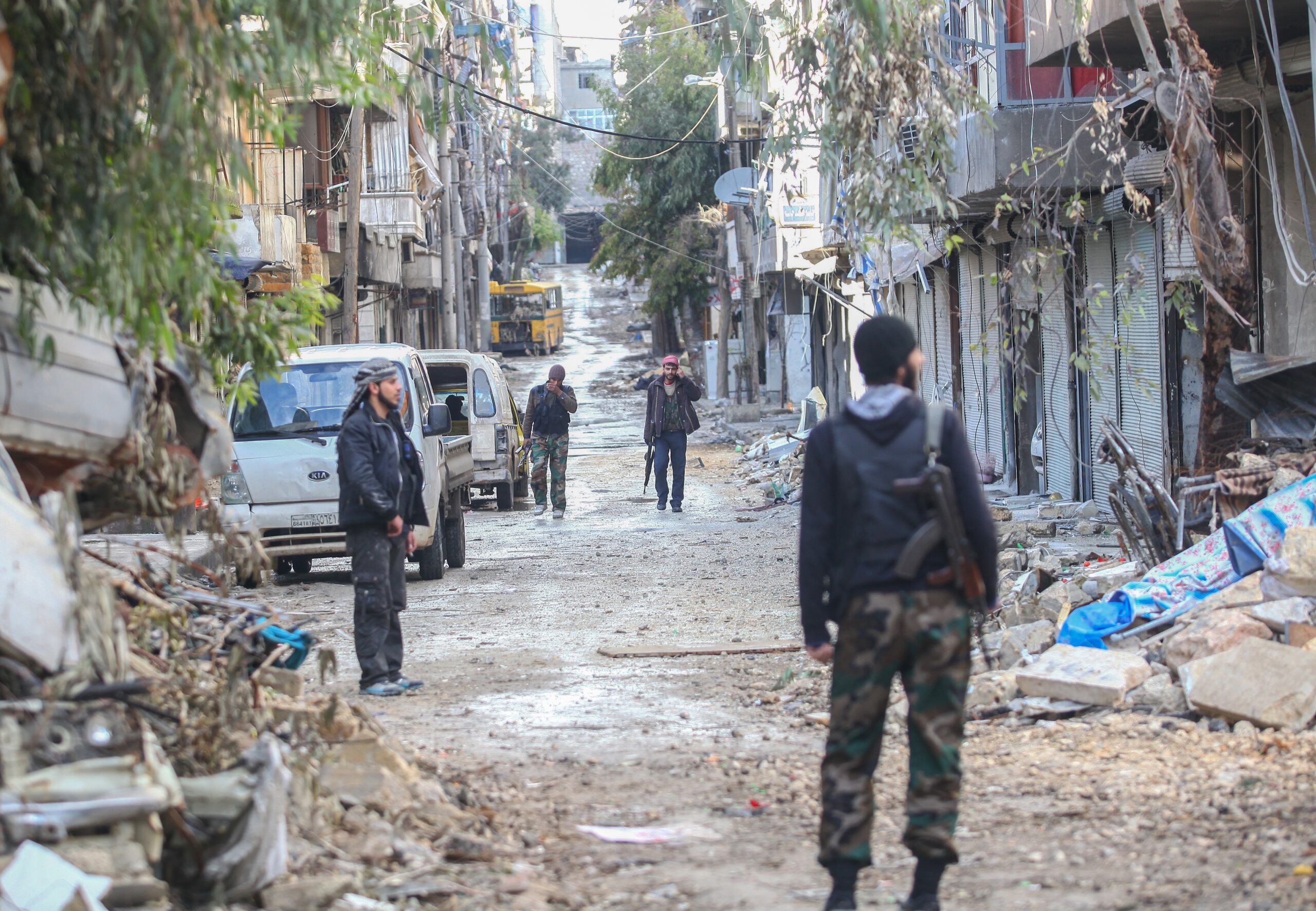
Armed soldiers among the ruined buildings of Aleppo, Syria (February 15, 2012). Credit: Mehmet Ali Poyraz / Shutterstock.com
This publication is issued by the Cross-Border Conflict Evidence, Policy and Trends (XCEPT) research programme, funded by UK International Development. XCEPT brings together world-leading experts and local researchers to examine conflict-affected borderlands, how conflicts connect across borders, the intersection of climate stresses and conflict, and the drivers of violent and peaceful behaviour, to inform policies and programmes that support peace.
The views and opinions expressed in this document are those of the author(s) and do not necessarily represent those of the UK government.
This document is issued on the understanding that if any extract is used, the author(s) should be credited, with the date of the publication and reference to XCEPT. While every effort has been made to ensure the accuracy of the material in this document, the author(s) will not be liable for any loss or damages incurred through the use of this document.