

By Dr Craig Larkin
“A walk through the old city of Mosul, Iraq, reveals an urban landscape still scarred by the violence of war and transfigured by ongoing reconstruction. Rubble-lined narrow streets give way to half-rebuilt homes and scaffolded storefronts, as merchants return and daily life resumes amid the heavy hum of generators and construction.The destructive reign of the Islamic State in Iraq and Syria (ISIS) from 2014 to 2017 and the city’s bloody liberation by Iraqi and allied forces left around 1 million inhabitants displaced and 130,000 homes damaged and destroyed. Mosul’s rebuilding process has been slow and imbalanced, imperiled by corruption scandals, militia control, property ownership forgery and a recovery focused on elite-driven commercial projects and internationally funded cultural heritage projects. Many displaced Moslawis still remain uncertain about returning to rebuild homes, reclaim land or resurrect former lives….”
Read the full article published with MERIP (Middle East Research and Information Project) here.
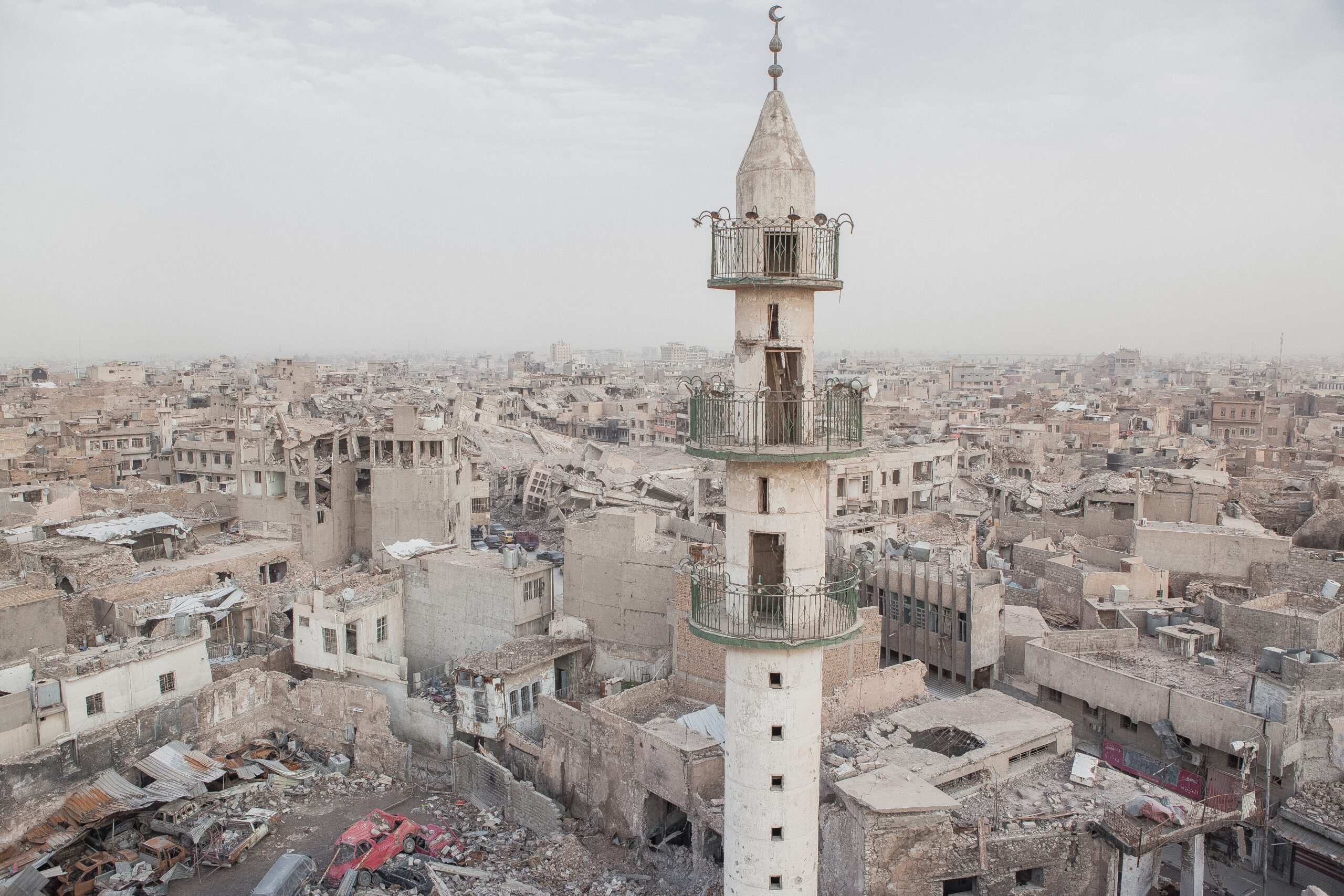
Mosul, Iraq – January 24th, 2018: Thousands of buildings were damaged during battles to retake Mosul from the Islamic State. Credit: Sebastian Castelier / Shutterstock.com
Dr Craig Larkin is a Reader in Middle East Politics and Peace and Conflict Studies, and Director, Centre for the Study of Divided Societies (CSDS) at King’s College London. He is Research Lead for the Violent and Peaceful Behaviour Strand of XCEPT research programme.

This publication is issued by the Cross-Border Conflict Evidence, Policy and Trends (XCEPT) research programme, funded by UK International Development. XCEPT brings together world-leading experts and local researchers to examine conflict-affected borderlands, how conflicts connect across borders, the intersection of climate stresses and conflict, and the drivers of violent and peaceful behaviour, to inform policies and programmes that support peace.
The views and opinions expressed in this document are those of the author(s) and do not necessarily represent those of the UK government.
This document is issued on the understanding that if any extract is used, the author(s) should be credited, with the date of the publication and reference to XCEPT. While every effort has been made to ensure the accuracy of the material in this document, the author(s) will not be liable for any loss or damages incurred through the use of this document.